
Luxury Overseas Real Estate: A Smart Portfolio Diversification Strategy
Reading time: 9 minutes
Ever looked at your investment portfolio and felt that nagging sense that it’s all tied to one economy, one currency, one set of political decisions? You’re not alone. As 2026 unfolds with persistent inflation concerns, currency volatility, and geopolitical uncertainty, high-net-worth investors are increasingly asking the same question: should some of my wealth live outside my home country?
The answer, for a growing number of sophisticated investors, is luxury overseas real estate. Not as a vanity purchase, but as a calculated, income-generating, risk-mitigating piece of a broader wealth strategy.
Table of Contents
- Why Luxury Real Estate Belongs in a Diversified Portfolio
- Understanding the Global Luxury Market in 2026
- Where the Smart Money Is Going
- Comparing Top Luxury Markets
- Common Challenges and How to Overcome Them
- Practical Roadmap for First-Time International Buyers
- FAQs
- Your Roadmap Forward
Why Luxury Real Estate Belongs in a Diversified Portfolio
Here’s the straight talk: putting all your wealth into one country’s stock market, currency, and property market is a bet—whether you realize it or not. True portfolio diversification means spreading risk across asset classes, geographies, and currencies so that no single event can derail your entire net worth. Luxury real estate abroad checks multiple boxes simultaneously. It’s a tangible asset that historically holds value better than equities during inflationary periods. It generates rental income in a foreign currency, which can hedge against depreciation of your home currency. And in many cases, it opens doors to residency programs, tax advantages, and lifestyle benefits that no stock certificate ever could.
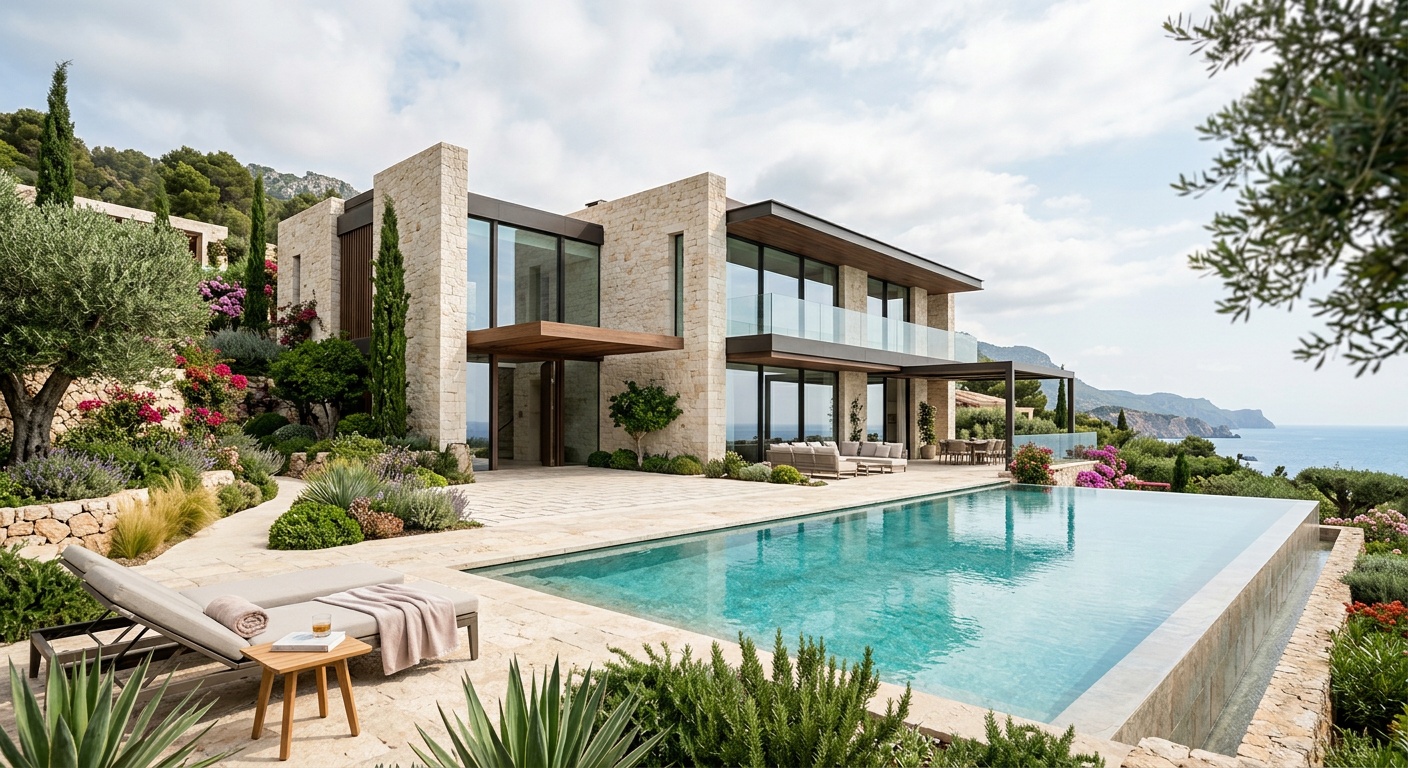
Consider this scenario: An investor based in a country experiencing currency depreciation of 8% annually purchases a €1.2 million villa in Portugal’s Algarve region. Even if the property appreciates modestly at 4% per year, the currency hedge alone can offset a significant portion of domestic purchasing power loss—while the villa generates €45,000-€60,000 annually in short-term rental income during peak season.
The Numbers Behind the Trend
According to Knight Frank’s 2026 Wealth Report, ultra-high-net-worth individuals now allocate an average of 17% of their total assets to real estate outside their country of primary residence, up from just 11% in 2021. That’s not a minor shift—it’s a structural change in how wealth is being protected and grown.
Christine Lagarde, in a 2025 address on global capital flows, noted that “capital increasingly seeks jurisdictions offering stability, transparency, and growth potential simultaneously”—a description that fits several luxury property markets almost perfectly.
Understanding the Global Luxury Market in 2026
Luxury real estate isn’t monolithic. A beachfront penthouse in Dubai behaves very differently from a historic palazzo in Florence or a ski chalet in Verbier. Understanding these distinctions is critical before committing capital.
Three macro trends are shaping the 2026 landscape:
- Golden Visa recalibration — Several European countries have tightened residency-by-investment thresholds, pushing buyers toward markets with clearer, faster pathways.
- Climate-resilient locations — Buyers are increasingly prioritizing regions with stable water access, moderate climates, and lower wildfire/flood risk.
- Digital-nomad-adjacent demand — Remote work continues to fuel demand in cities with strong infrastructure but lower cost of living than traditional capitals.
Where the Smart Money Is Going
Greece has quietly become one of the standout performers of the past three years. Prices in prime Athens neighborhoods rose approximately 11% in 2025 alone, driven by a mix of foreign investment, limited prime inventory, and renewed tourism records. Investors researching athens luxury real estate are finding that yields in the 4-6% range are still achievable in a market that remains, comparatively, undervalued against Western European capitals like Paris or London.
Other markets worth watching in 2026 include:
- Dubai — Continued tax-free income appeal, though supply growth is beginning to soften ultra-prime price acceleration.
- Lisbon and the Algarve — Steady demand despite Golden Visa program changes, supported by strong rental fundamentals.
- Northern Italy (Lake Como, Milan) — Scarcity-driven appreciation in a historically stable market.
- Mexico’s Riviera Nahuatl and Cabo — Growing appeal for North American investors seeking proximity and favorable exchange rates.
Comparing Top Luxury Markets
| Market | Avg. Rental Yield | 2025 Price Growth | Residency Pathway | Entry Price (Prime) |
|---|---|---|---|---|
| Athens, Greece | 4-6% | 11% | Golden Visa (€400k+) | €600,000+ |
| Dubai, UAE | 5-7% | 8% | Golden Visa ($545k+) | $1,000,000+ |
| Lisbon, Portugal | 3-5% | 6% | D7/D2 Visa | €700,000+ |
| Milan, Italy | 2-4% | 7% | Elective Residency | €900,000+ |
| Cabo, Mexico | 6-8% | 9% | Temporary Resident Visa | $800,000+ |
2025 Price Growth Comparison
Common Challenges and How to Overcome Them
Challenge 1: Currency and Financing Complexity
Financing a luxury property abroad rarely works the same way it does at home. Many buyers assume they can simply transfer funds and close, only to discover foreign banks require local income verification or higher down payments—often 30-40% for non-residents.
The fix: Work with a mortgage broker who specializes in cross-border lending, and consider currency forward contracts to lock in exchange rates months before closing. This single step can save tens of thousands on a seven-figure purchase.
Challenge 2: Legal and Tax Structuring
Owning property directly in your own name isn’t always optimal. Inheritance laws, capital gains treatment, and annual property taxes vary enormously between jurisdictions—and some countries impose forced heirship rules that override your home country’s will.
The fix: Engage a local tax attorney before signing anything, not after. In many cases, holding the property through a local corporate structure or trust dramatically simplifies succession and reduces tax exposure.
Challenge 3: Remote Management
A villa sitting empty for ten months a year isn’t diversification—it’s a liability with a view. Property management, maintenance, and tenant turnover need active oversight from thousands of miles away.
The fix: Budget 8-12% of gross rental income for a reputable local property management firm. Treat this as a cost of doing business, not an optional add-on.
Practical Roadmap for First-Time International Buyers
- Define your objective first — Are you buying primarily for capital appreciation, rental yield, residency, or personal use? This determines everything else.
- Shortlist three markets, not one — Compare yield, growth trajectory, and legal ease before falling in love with a single property.
- Assemble a local team — Lawyer, tax advisor, and property manager should be engaged before you make an offer, not after.
- Stress-test the currency exposure — Model what happens to your returns if the local currency moves 10-15% against your home currency.
- Start with a manageable ticket size — A €600,000-€900,000 property in an emerging luxury pocket often outperforms an overextended purchase in a saturated prime market.
FAQs
Is luxury overseas real estate only for ultra-wealthy investors?
Not anymore. While ultra-prime markets like Monaco or Manhattan require significant capital, markets such as Athens, Lisbon, or Cabo offer genuine luxury properties starting around €600,000-$800,000, making diversification accessible to a broader range of affluent investors.
How much of my portfolio should be allocated to overseas property?
Most wealth advisors suggest 10-20% of a diversified portfolio for real estate, with a portion of that allocated internationally. The right figure depends on your liquidity needs, risk tolerance, and existing home-market exposure.
What’s the biggest mistake first-time international buyers make?
Skipping local legal and tax due diligence. Buyers often focus entirely on the property itself while underestimating how ownership structure, inheritance law, and tax residency rules can dramatically affect long-term returns.
Your Roadmap Forward
The global wealth landscape of 2026 rewards those who think beyond borders. As currency volatility, inflation, and shifting residency policies continue to reshape how capital moves, luxury overseas real estate is proving itself not as a speculative indulgence, but as a genuine risk-management tool.
- Start small, think strategically — a single well-chosen property teaches more than any market report.
- Prioritize legal clarity over emotional appeal — the view matters less than the ownership structure.
- Reassess annually — currency shifts and policy changes mean your allocation should evolve, not sit static.
Whether you’re drawn to a sun-drenched Mediterranean terrace or a high-yield city apartment, the question isn’t whether international property belongs in a serious portfolio—it’s how soon you’ll start building yours.
About the Author
